Shopify's latest AI announcement is all about the shopper. But what about the retailer?
Shopify is making it easier than ever for customers to discover and buy products through AI. But while the shopping journey is changing, there's one thing brands shouldn't overlook: the experience on their own websites.
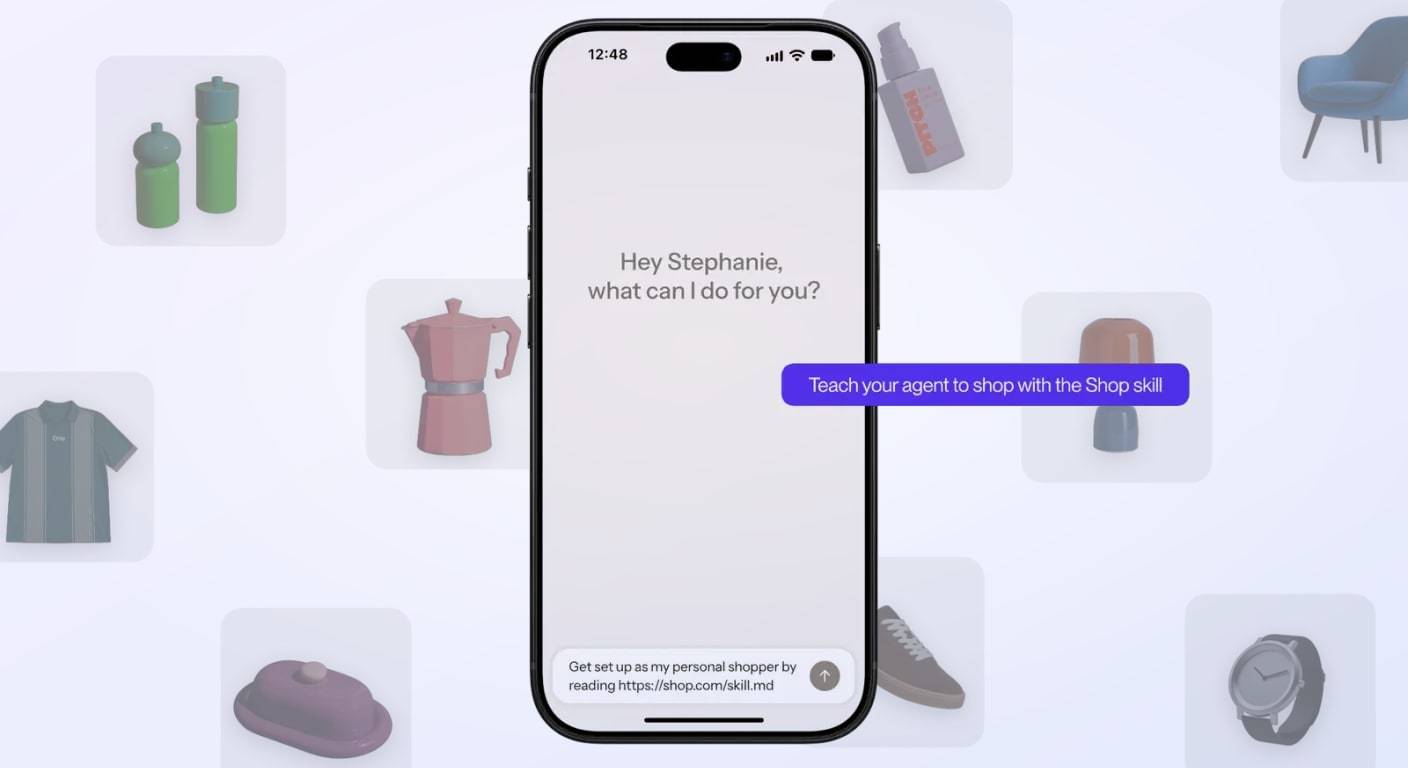
A serious push into agentic commerce
On 28 October 2026, Shopify unveiled its Fall '26 Edition, with some significant announcements around AI-powered shopping.
From turning ChatGPT and Claude into personal shoppers to bringing Shop Pay into more AI assistants, Shopify is making a serious push into what's becoming known as agentic commerce.
It's an exciting development and another indication of how quickly ecommerce is changing. But there's something particularly interesting about the direction Shopify is taking: much of this announcement is focused on the shopper, rather than the retailer.
While these developments could create huge opportunities for brands, they also raise an important question. As AI transforms how people discover products, what happens to the experience customers have when they reach a retailer's own website?
What has Shopify announced?
At the centre of the announcement is a new feature called Shop skill for any agent, which allows customers to turn AI assistants like ChatGPT and Claude into personal shoppers.
Rather than browsing multiple websites, someone could ask their AI assistant to find a waterproof jacket under £150, compare the best options and recommend something that suits their preferences. The assistant can search Shopify's catalogue of more than a billion products and help customers complete purchases using Shop Pay.
Shopify is also expanding Shop Pay into more AI platforms, making it possible for customers to discover and purchase products without following the traditional online shopping journey.
The concept is relatively simple. Shopping is becoming more conversational, personalised and less dependent on traditional search.
The interesting part is who the AI works for
One of the most interesting aspects of Shopify's announcement is how much of the technology is built around the individual shopper.
Customers can tailor their AI assistants to their preferences, whether that's finding the best deals, prioritising sustainable products or remembering their favourite brands. The agent can search across thousands of retailers and recommend whichever products it believes best meet the customer's needs.
But there's an important distinction here. The AI agent works for the shopper, not the retailer.
Brands don't control which products get recommended, how they're compared with competitors or whether they appear in the conversation at all. They also don't automatically get access to the valuable information collected throughout that shopping journey, such as the customer's wider preferences, questions, conversations and buying intentions.
While retailers may still receive referral information, sales insights and order data, they don't own the wider conversation that led the customer to their products.
And that's commercially significant. Understanding what customers are looking for, which questions they're asking and what's stopping them from buying can help retailers improve their product ranges, marketing and overall customer experience.
When those conversations happen entirely on third-party AI platforms, brands have limited visibility into that part of the journey. By bringing conversational shopping onto their own websites, retailers have an opportunity to build that understanding directly, with appropriate customer privacy and data controls.
What does this mean for getting discovered?
There's already plenty of conversation around Answer Engine Optimisation (AEO) and how retailers can get their products recommended by AI. Understandably, brands are starting to wonder whether they're falling behind.
The good news is that there's no need to panic, but there is every reason to get started.
Shopify makes it clear that having products in its catalogue doesn't guarantee they'll appear in AI recommendations. Each AI platform ultimately decides which products to display, and there's currently no guaranteed way to secure a position at the top of an AI-generated shopping list.
For now, the sensible approach is to focus on the fundamentals: accurate product descriptions, clear pricing, complete product information and up-to-date delivery and returns policies.
These improvements are worth making today. The better retailers structure and maintain their product information, the better positioned they'll be as AI discovery continues to develop.
There's no need to spend thousands on an unproven optimisation strategy, but equally, brands shouldn't sit around waiting for agentic commerce to become mainstream before taking action.
The opportunity is real, and now is the time to start preparing for it.
Are customers actually shopping like this yet?
There's an important difference between what technology makes possible and how people actually shop today.
AI is already changing how customers research products, compare options and make buying decisions. However, the average customer isn't necessarily setting up a personalised AI agent to manage their shopping just yet.
Shopify's new skill is impressive, but it's likely to appeal initially to people who are already comfortable using AI assistants. For most consumers, visiting a website, searching for a product and checking out remains the more familiar experience.
That doesn't make the announcement any less significant. It shows where Shopify believes the future of shopping is heading, and as AI assistants become easier to use, these experiences will become more accessible.
Retailers don't need to assume every customer will be shopping through an AI agent tomorrow, but they should recognise that expectations around finding products and getting personalised recommendations are already changing.
What Shopify's Shop Pay expansion tells us
Another significant part of Shopify's announcement is the expansion of Shop Pay into more AI assistants.
Shopify reports more than 400 million Shop Pay accounts, and it's increasingly making that payment experience available beyond its own ecommerce ecosystem.
As product discovery spreads across AI platforms, Shopify is positioning Shop Pay to remain part of the transaction, regardless of where the shopping journey begins.
For retailers, this opens up opportunities to reach customers through entirely new channels. However, it also raises questions about the customer relationship.
If shoppers increasingly discover products, compare brands and complete purchases through third-party AI platforms, retailers have less visibility and control over parts of the journey that previously happened on their own websites.
Reaching new customers is important, but so is understanding their needs, building loyalty and encouraging them to return. That's why a brand's own website, and the experience it provides, will remain such an important part of ecommerce.
AI shopping agents aren't replacing your website
Despite these announcements, Shopify isn't suggesting that retailer websites are disappearing.
Some AI platforms will allow purchases to happen directly within the conversation, while others, including ChatGPT's current Shopify discovery experience, direct customers back to the retailer's checkout.
This creates an interesting challenge for brands.
Imagine a customer spending five minutes talking to an AI assistant. They've explained their budget, their preferences and exactly what they're looking for. The AI understands their needs, asks relevant questions and recommends suitable products.
Then they arrive on a retailer's website, where they're suddenly back to using a traditional search bar, navigating filters and scrolling through product pages.
The customer has just experienced a personalised, conversational way of shopping, only to find that the retailer's own website still expects them to shop the traditional way.
As conversational shopping becomes more common, customers will increasingly expect that same experience on the websites they visit.
AI shopping agents aren't making the storefront irrelevant. They're creating new expectations around what a good online shopping experience should look like.
Where Morvo fits in
This is exactly the opportunity we're addressing at Morvo.
Morvo is an AI personal shopper that lives directly on a retailer's Shopify website, helping customers discover and choose products through natural conversation.
Rather than searching across thousands of different brands, Morvo focuses on the retailer's own catalogue. It understands their products, collections, offers and policies, and uses that information to help customers find what they're looking for.
Someone might need a skincare routine for sensitive skin, an outfit for a wedding or a pushchair that fits into a small car boot. Instead of navigating dozens of product pages, they can simply describe what they need and receive relevant recommendations from the store they're already visiting.
For retailers, this creates an opportunity to improve the experience for customers they've already worked hard to attract, increase conversions and build stronger relationships through their own storefront.
It also means brands can gain a better understanding of what customers are asking for, which products they're considering and where they might need more support, rather than relying entirely on insights provided by third-party platforms.
And that's why Morvo and the AI shopping agents Shopify is supporting aren't competing to solve the same problem.
AI agents can help customers discover your brand. Morvo can help them shop once they get there.
Both have an important role to play as ecommerce becomes more conversational.
What should Shopify brands do now?
For retailers wondering what action to take following Shopify's announcement, there are a few practical places to start:
- Get your products into AI discovery channels. Check your Shopify Catalog eligibility and make sure you're taking advantage of the AI channels available to your store.
- Start optimising your product information for AI. Improve descriptions, fill gaps in product attributes, maintain accurate pricing and ensure your variants are properly represented.
- Review your store's knowledge base. Make sure AI platforms have access to clear, accurate information about your policies, delivery options and business.
- Start building AI discovery into your ecommerce strategy. Treat it as an emerging acquisition channel worth investing time in now, rather than something to revisit in a year's time.
- Review your own shopping experience. Consider how easy it is for someone to find the right product when they know what they need but don't know exactly what to search for.
The future of ecommerce
Shopify's announcement represents another significant step towards a future where shopping is more conversational, personalised and accessible through AI.
For retailers, the opportunity isn't just about making sure products can be discovered through these new channels. It's also about making the most of the customers who choose to visit their own websites.
Because the future of ecommerce isn't just about helping people discover what you sell. It's about making it easier for them to buy it.
Try Morvo privately on Shopify
Install it from the Shopify App Store in 2 minutes and try it on your real products. Nobody else sees it until you go live. Free for 30 days.

Not on Shopify? Create an account